Is Bazurto Market worth visiting?
For travelers who use food as a way to understand a destination, we think it can be.
Bazurto is especially interesting if you want to see where ingredients come from, discover products you may never have encountered before and experience a place that functions primarily for the people of Cartagena rather than for visitors.
That does not mean everyone will enjoy it.
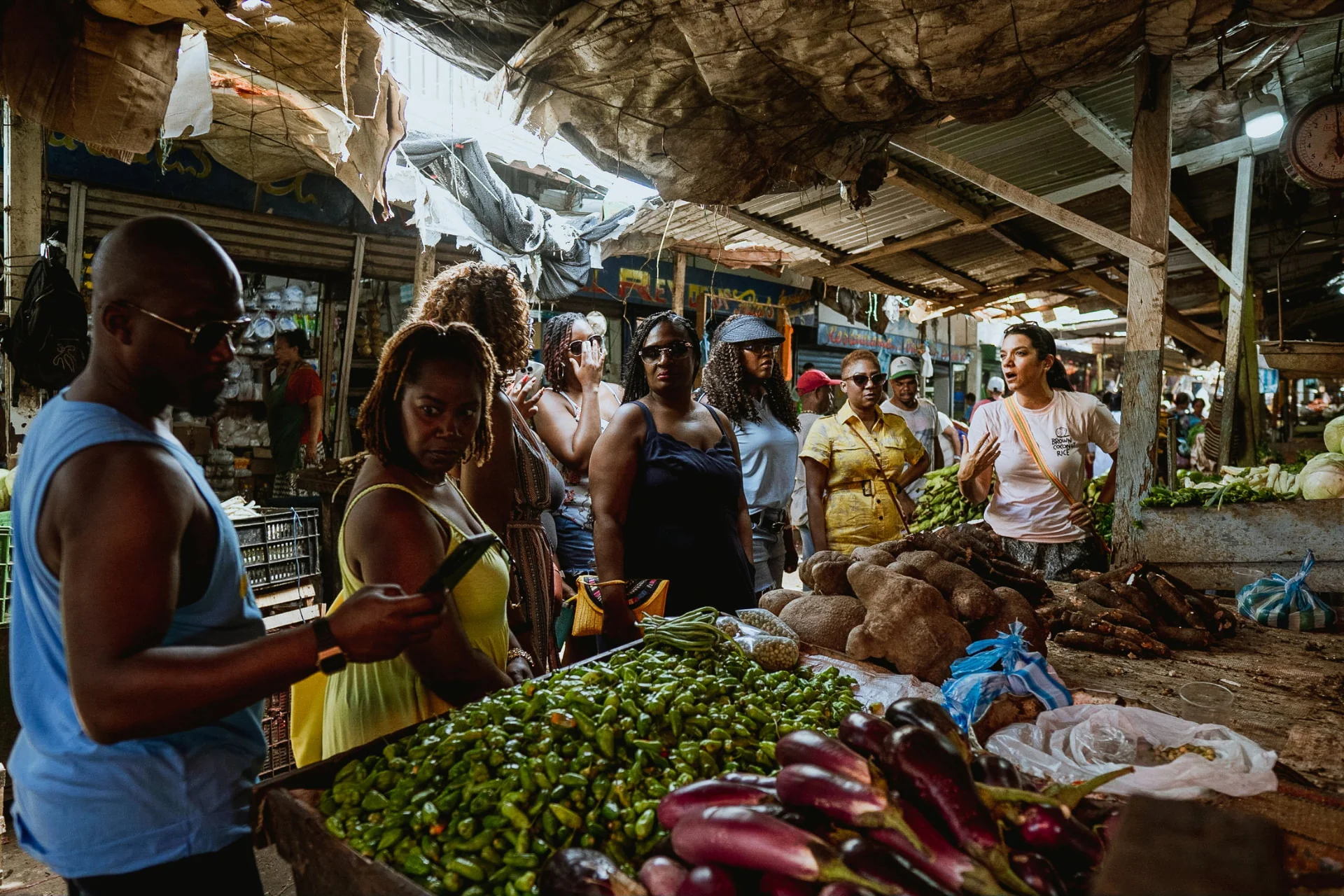
The market can feel intense. There is heat, noise, movement, strong smells and a network of passages that can be confusing when you visit for the first time.
If you prefer quiet, highly organized tourist environments, are particularly sensitive to crowds or strong smells, or have significant mobility limitations, Bazurto may not be the right experience for you.
Knowing that before you go makes a difference.
What is Bazurto Market?
Bazurto is Cartagena's public market and central food market. It is also one of the city's most important centers for commercial exchange.
According to the Museo Histórico de Cartagena, the market has played an important economic, social and cultural role in the city and provides work for many people in Cartagena.
Its history is connected to Getsemaní.
Cartagena's previous public market was located there. As the city grew, problems with space, infrastructure and mobility made a new market increasingly necessary. In January 1978, vendors were transferred to the new market at Bazurto.
That history helps explain the place today.
Bazurto was not created as a sightseeing attraction. It exists because products need to arrive, be bought, sold and distributed throughout the city.
Understanding that changes the way you see it.
What does Bazurto actually feel like?
The first few minutes can be a lot to take in.
People move quickly through narrow passages. Vendors call out. Carts and motorcycles move through parts of the market. The fish area smells like a working seafood market. Some sections are crowded and hot.
Then you begin to notice the details.
A fruit you have never tasted. A fish you do not recognize. Bundles of herbs. Yuca and ñame. Spices, plants and food being prepared in traditional restaurants.
For someone arriving for the first time, the market can look chaotic.
For the people who work there every day, there is much more structure than a visitor initially sees. They know where products arrive, who sells what and how to move through the different sections.
That is one reason Bazurto becomes more interesting once you begin to understand what you are looking at.

Food and ingredients to look for in Bazurto
No two mornings are exactly the same. Products change depending on availability, which is part of what makes visiting a working market interesting.
These are some of the things we regularly show guests.
Tropical fruit
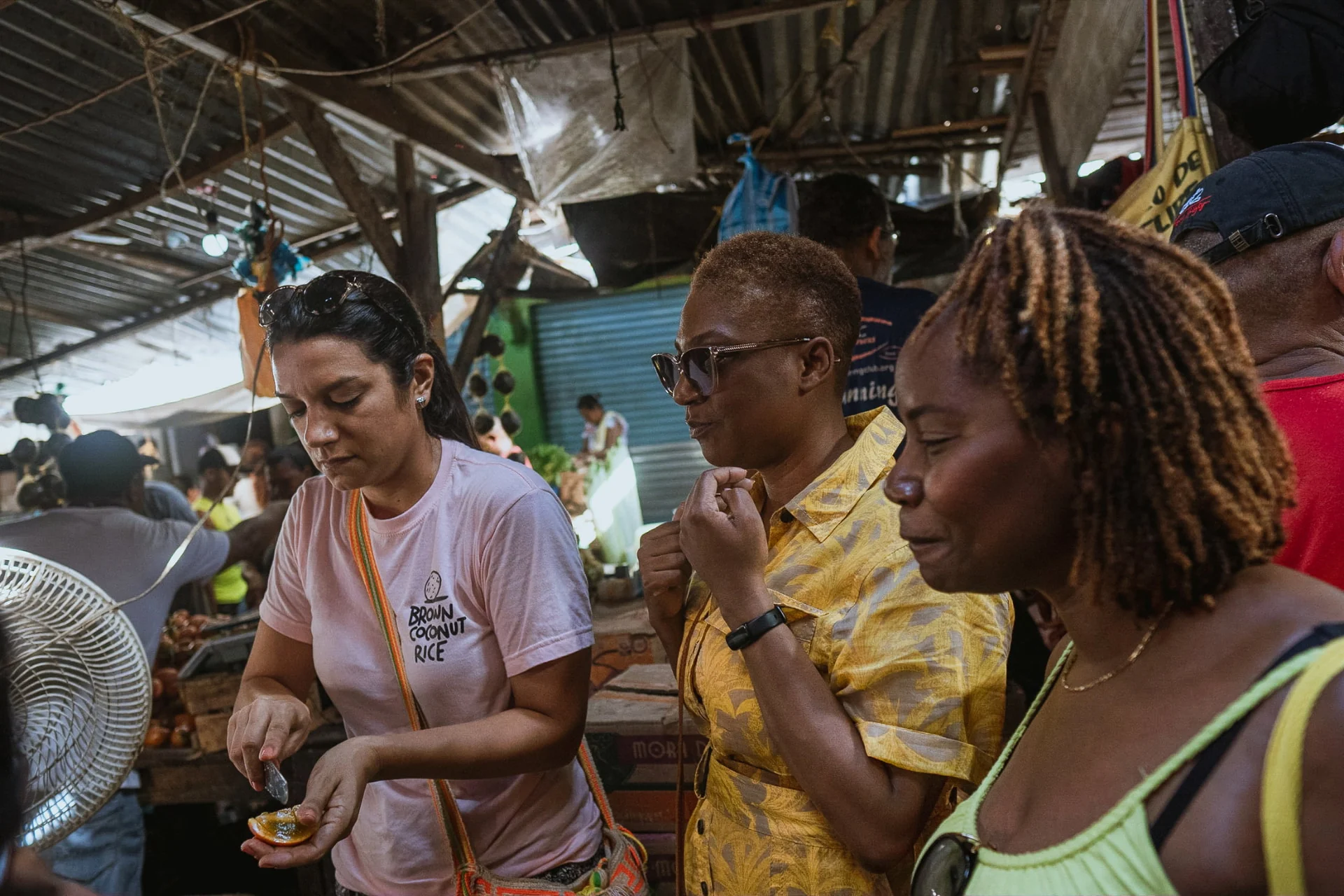
Fruit is often one of the most memorable parts of the visit.
Depending on what is available, our guides may introduce guests to fruits such as lulo, granadilla, níspero, mamey or tomate de árbol.
We normally taste fruit during the visit.
For many guests, it is their first encounter with some of these flavors.
Fish and seafood
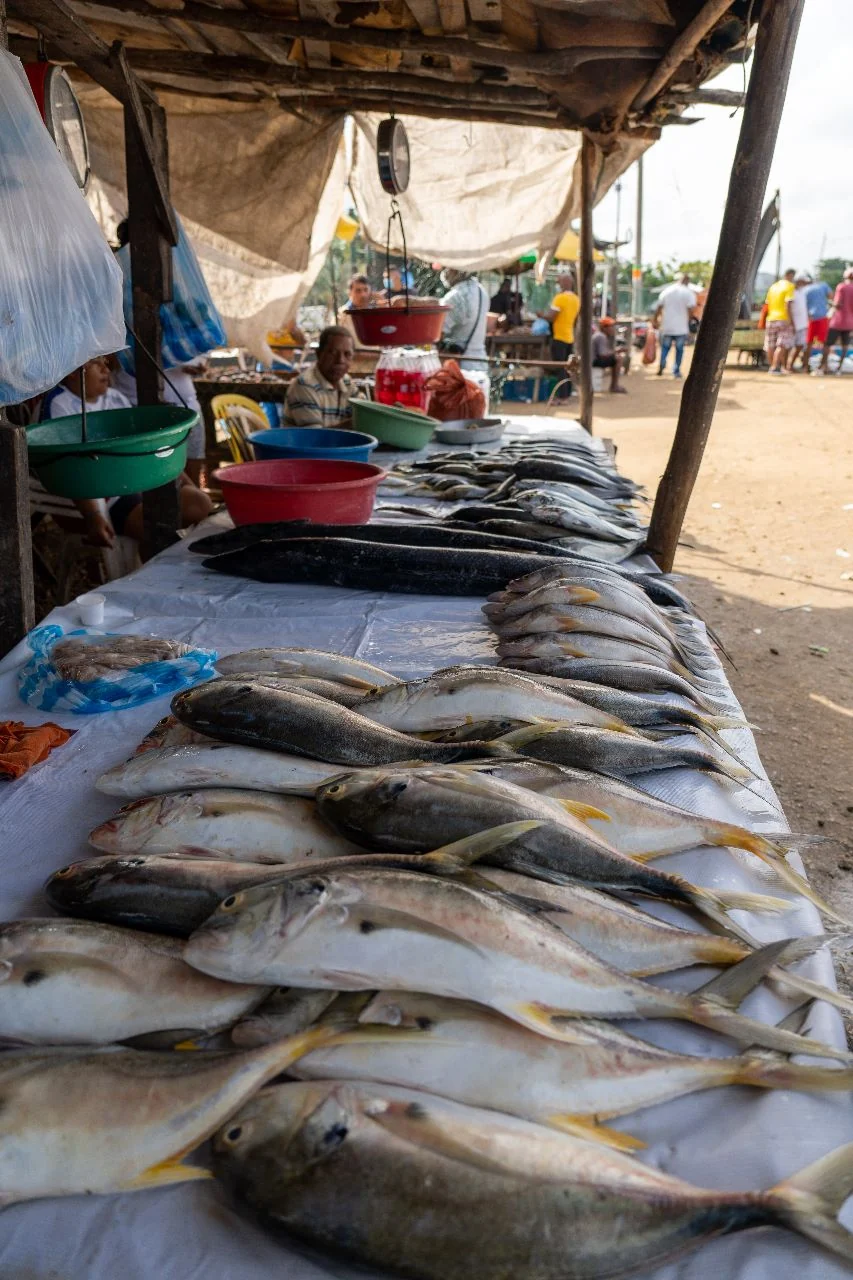
The fish and seafood area is another important part of our route.
Depending on the day, guests may see pargo, róbalo, jurel, chip chip and other seafood. Ray and shark can also appear in the market.
What interests us most is not completing a checklist of species. It is understanding how closely seafood is connected to Cartagena's identity as a Caribbean coastal city and to the food people cook here.
Tubers, herbs, leaves and spices
Some of the most interesting ingredients are easy to walk past when you do not know what they are.
Ñame and yuca are common examples.
Guests may also encounter cilantro and bledo, as well as hoja de bijao, traditionally used in cooking.
Other stalls may carry plants such as eucalyptus and calendula, which are commonly sold for traditional uses, alongside spices such as achiote, cumin, cloves and pimienta de olor.
These ingredients begin to explain many of the flavors, aromas and cooking traditions found in Cartagena and the Colombian Caribbean.
From the market to the Cartagena kitchen
This is the part of Bazurto that interests us most at Lunático.
A market becomes easier to understand when you know what happens to its ingredients after they leave.
Pargo is no longer simply a fish on a counter when you begin to understand its place in Caribbean cooking. Yuca and ñame become more than unfamiliar roots. Herbs, spices and other products start connecting with dishes you may encounter throughout Cartagena.
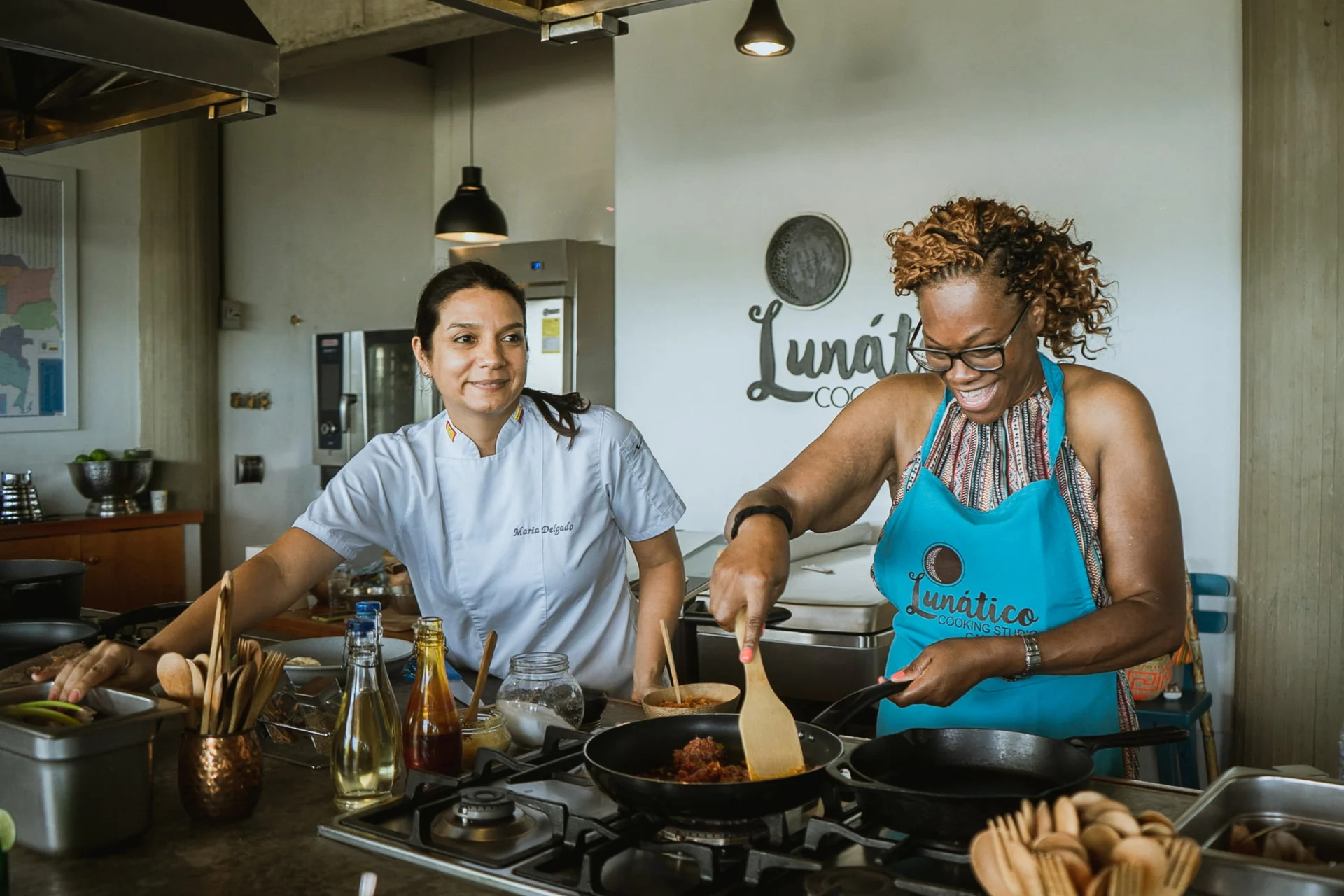
That connection is also why our own Bazurto experience continues into the kitchen.
The idea is not simply to walk through the market, take photographs and leave. It is to understand the relationship between the products in front of you and the food that eventually reaches the table.
Not everything seen at the market will necessarily appear in a cooking class on that particular day. Products and menus change.
What matters is beginning to understand where the food comes from and how it fits into Cartagena's culinary culture.
When is the best time to visit Bazurto?
We recommend going early in the morning.
The market is already very active, fresh products are arriving and the temperature is generally more comfortable than later in the day.
It is also a good time to see Bazurto functioning as a place of work.
How long do you need?
For a first visit focused on the main food areas, we consider around one hour inside the market reasonable.
Bazurto is large, but trying to see every section is not necessarily the best way to understand it.
A focused visit to the areas that interest you most can be much more useful.
Remember to add transportation time.
What should you wear and bring?
Comfort matters more than anything else.
We recommend comfortable clothes and closed shoes.
A hat and sun protection can be useful. You may also want to carry a small amount of cash if you plan to buy something.
We recommend leaving jewelry and unnecessary valuables behind.
Bazurto is a working food market, so it makes sense to dress for that environment rather than as if you were spending the morning walking through Cartagena's historic center.
Can you visit Bazurto without a guide?
Yes.
The more useful question is what you want to get from the visit.
One of the main difficulties for people visiting for the first time is orientation. Bazurto has many passages and different sections, so it is easy to spend an hour walking without reaching the areas you were actually interested in.
There is also the question of context.
Over the years, our team has built relationships with vendors and people who work in the market. We follow a route we know well and understand which areas are particularly useful for explaining Cartagena's food culture.
Someone visiting independently may still enjoy exploring the market, especially if they are comfortable in busy local environments.
Someone who wants to understand what they are seeing may get much more from visiting with a person who knows Bazurto.
Safety and practical considerations
We do not think describing Bazurto simply as "safe" or "unsafe" is particularly useful.
It is a large and crowded working market in a busy part of Cartagena. Visitors should behave accordingly.
Before going, we recommend leaving unnecessary jewelry and valuables behind. Phones can be used, but we advise guests to keep control of them and remain aware of their belongings.
When we visit, the group stays together and follows a route that our guides know well. We avoid quieter passages and sections outside the areas we normally use.
We also regularly visit vendors and people with whom we have developed relationships over time.
These precautions are simply part of visiting a busy market responsibly.
Is Bazurto suitable for children?
It can be.
Our experience taking families to Bazurto has generally been positive.
We do, however, explain beforehand what children will encounter.
There is noise, heat, movement, strong smells, raw fish, crowded passages and an environment that feels very different from Cartagena's main tourist areas.
Some children find that fascinating. Others may find it uncomfortable.
Parents usually know how their child reacts to unfamiliar and intense environments, so we prefer to explain what Bazurto is like rather than simply label it family friendly.
Who might not enjoy Bazurto?
Bazurto will not suit every traveler.
People with significant mobility difficulties may find parts of the market difficult to navigate.
The same may apply to travelers who are particularly sensitive to strong smells, crowds or constant noise.
It is also probably not the right place for someone expecting a clean and picturesque tourist market.
That does not make Bazurto less interesting. It simply means that understanding the environment before visiting is important.
Common mistakes on a first visit
Trying to see everything is one of the most common mistakes.
Bazurto is large. A focused visit usually makes more sense than wandering through as many sections as possible.
Another mistake is arriving without knowing what you want to understand. If your interest is food, the fruit, fish, ingredients and traditional food areas may be much more useful than treating the entire market as one large attraction.
Poor footwear is another easy mistake to avoid. Comfortable, closed shoes make much more sense here.
There is also a more important mistake: seeing only the disorder.
The noise and movement are real, but they are not the whole market.
There are products, knowledge, relationships and people whose daily work is connected to what happens there.
Looking beyond the first impression
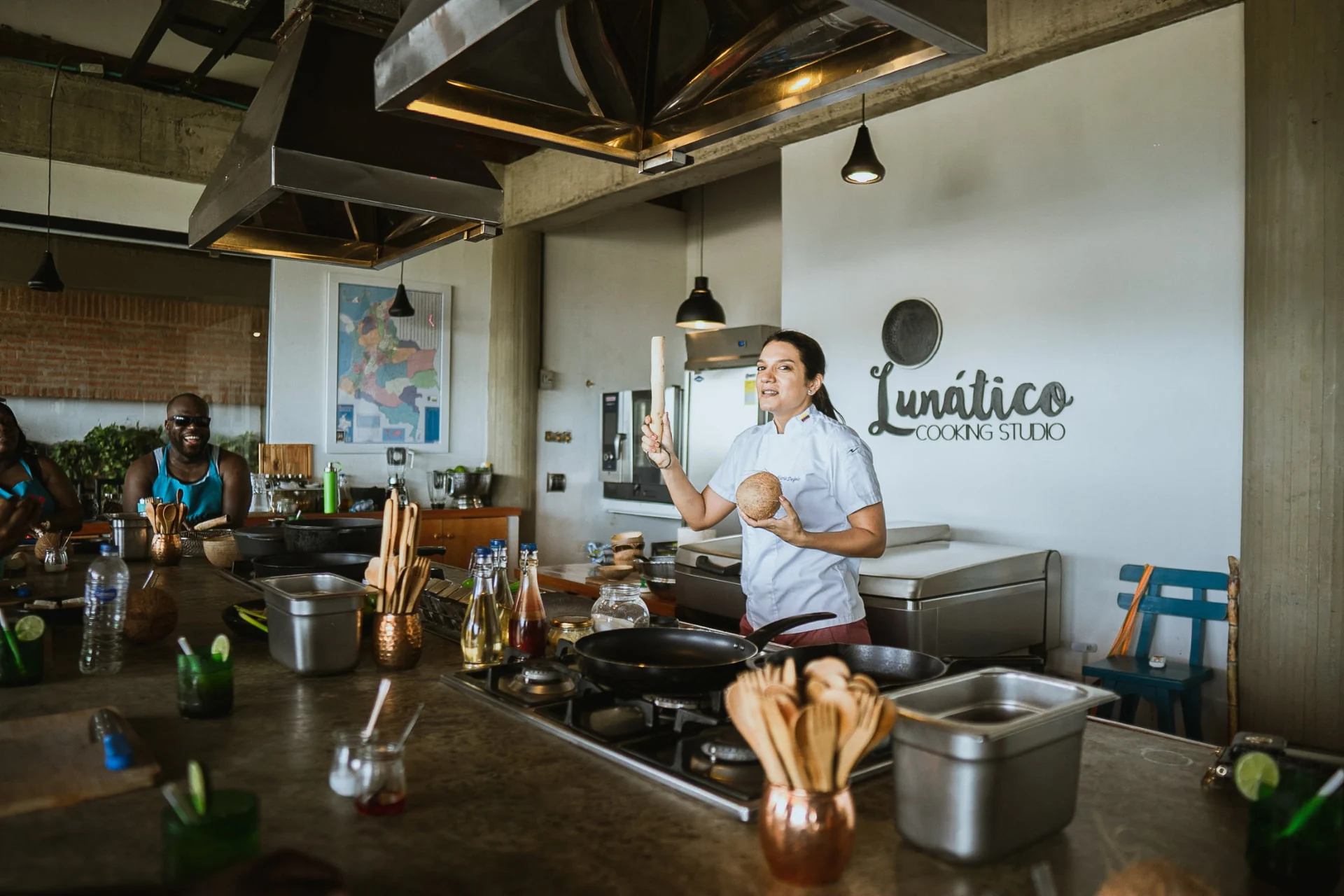
Guests often comment on the contrast between Bazurto and Lunático once we return to the studio.
The market is full of movement. Our kitchen is much more controlled and calm, with a very different setting and views across Cartagena.
But the two places are connected.
What you see arriving, being sold and discussed in Bazurto helps explain what eventually appears in kitchens across the city.
For us, that is the real reason to visit.
Bazurto gives you a chance to understand Cartagena through food before that food reaches the plate.